
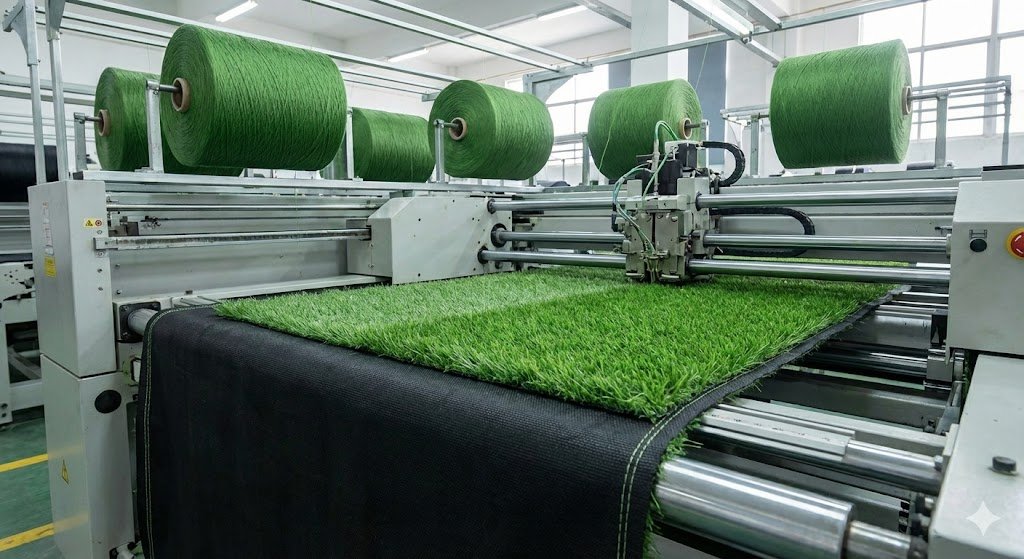
Artificial grass is made by melting down synthetic polymer pellets—typically polyethylene or polypropylene—mixed with colorants and UV stabilizers to create a molten liquid. This liquid is then extruded through a steel plate to form long strands of yarn, which are subsequently tufted (stitched) into a fabric backing and sealed with a latex or polyurethane coating to lock the fibers in place.
If you have ever walked on a lush, green synthetic lawn in East Legon or Cantonments, you might have paused to wonder: How do they actually make this look so real?
It isn’t just green plastic sheets chopped up. The manufacturing of modern artificial grass is a sophisticated blend of chemical engineering and heavy-duty textile manufacturing. It shares more DNA with carpet making than you might expect, but with a lot more focus on durability to withstand the harsh Accra sun and heavy foot traffic.
In this guide, we will take you behind the factory doors to see exactly how raw plastic pellets are transformed into the realistic turf we install in homes and businesses across Ghana.
The Raw Materials: What Is Synthetic Turf Made Of?
Before the machines start running, we need the right “ingredients.” The quality of the final product depends entirely on the quality of these raw materials.
Most artificial grass consists of three primary polymers:
| Material | Key Characteristic | Best Used For |
| Polyethylene | Soft, realistic feel | Main grass blades (the part you see and touch) |
| Polypropylene | Stiff, durable | The “thatch” layer (curly fibers) for support |
| Nylon (Polyamide) | Extremely strong, heat resistant | High-traffic sports fields or putting greens |
Check out the difference between Nylon and Polyethylene turf here
The “Secret Sauce” Additives
Plastic alone isn’t enough. To survive outdoors, specifically in a tropical climate like Ghana’s, manufacturers add specific chemicals during the mixing stage:
- UV Stabilisers: Essential for preventing the grass from fading or becoming brittle under the intense African sun.
- Colorants: Pigments (usually various shades of green and brown) to mimic natural grass species like Bermuda or Fescue.
The Manufacturing Process: Step-by-Step
The journey from a plastic pellet to a finished roll of turf involves four main stages: Extrusion, Tufting, Coating, and Finishing.
1. Batching and Extrusion (Making the Yarn)
The process begins in a giant hopper. The polymer pellets (white or clear) are mixed with the green dyes and UV stabilizers.
This mixture is heated until it becomes a molten liquid with a consistency similar to taffy. Under immense pressure, the machine pushes this liquid through a steel plate with holes (a die). This is called extrusion.
- Shape Matters: The shape of the hole determines the shape of the grass blade. This is where “C-shape,” “W-shape,” or “Diamond-shape” blade technologies are born. These shapes help the grass stand upright and reflect light naturally.
Once the strands exit the extruder, they are cooled in a water trough and stretched. Stretching aligns the molecules in the plastic, making the yarn incredibly strong.
2. Tufting (Stitching the Grass)
Once the yarn is spooled, it moves to the tufting machine. Think of this as a giant sewing machine with hundreds of needles working simultaneously.
- A primary backing (a woven fabric, usually polypropylene) is fed through the machine.
- The needles pierce the backing, pushing the green yarn through to form loops.
- Little knives cut the loops, creating the “cut pile”—the individual blades of grass.
At this stage, the grass looks real, but it is fragile. If you pulled on a blade, it would slide right out of the backing.
3. Coating (Locking It All In)
To secure the blades, the tufted carpet moves to the coating line. The rug is flipped over, and a liquid bonding agent is applied to the back.
There are two main types of coating:
- Latex: The industry standard. It is heavy, durable, and cost-effective.
- Polyurethane (PU): Lighter and allows for better drainage. PU is often preferred for pet owners because it doesn’t absorb odors as easily as latex.
The turf then goes into a massive oven to cure (dry) the coating, permanently locking the fibers into the backing.
4. Perforation and Inspection
You can’t have a lawn that floods every time it rains. The final manufacturing step involves piercing the backing with hot pins to create drainage holes. These holes allow water to pass through the turf and into the sub-base below.
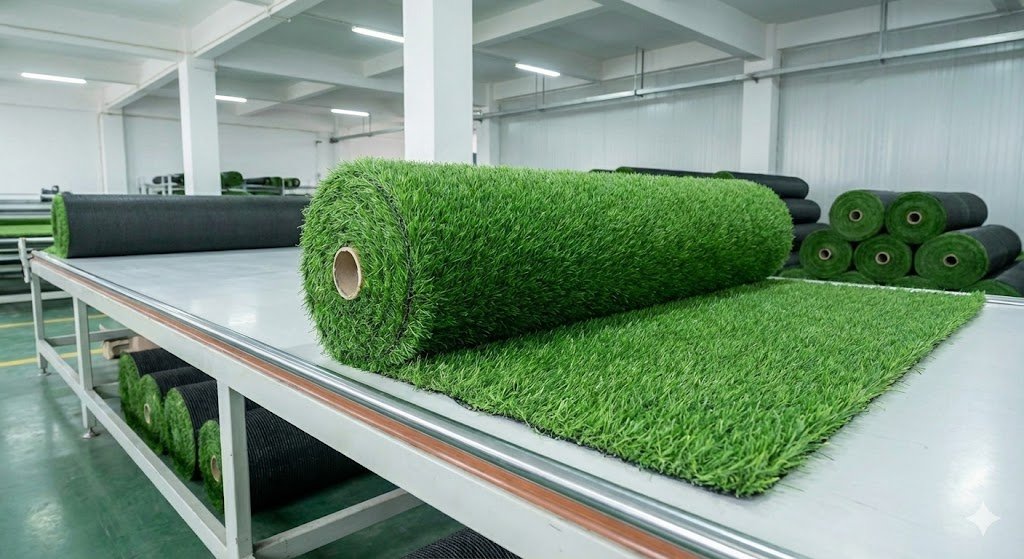
Finally, the turf is inspected for consistency in pile height and color, rolled up, and shipped to suppliers (like us!) here in Ghana.
How to Spot Quality Manufacturing
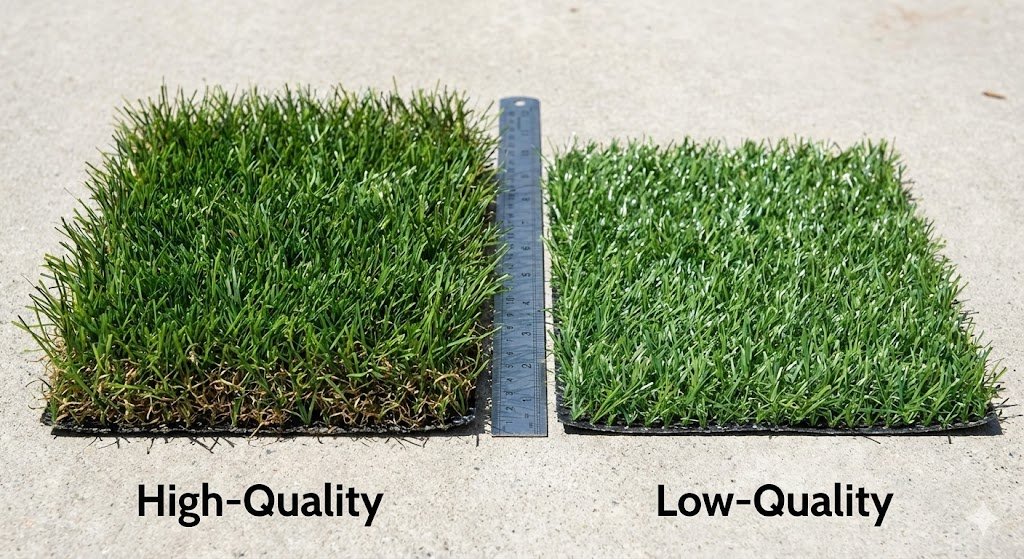
Not all manufacturing processes are equal. Cheap turf often skips on the UV stabilizers or uses a thin, weak backing. When shopping for turf in Accra, look for:
- Face Weight: A higher face weight implies more yarn was used, making the grass denser and more luxurious.
- Backing Strength: Try to pull a fiber out. In quality turf, the coating should hold it tight.
- Blade Shape: Flat blades look fake and retain heat. Engineered shapes (W or C) look more natural and stay cooler.
Read our guide on How to Choose the Best Artificial Grass for Your Home
Frequently Asked Questions (FAQs)
Is artificial grass made from recycled materials?
Sometimes. While the backing often uses recycled plastics, the grass blades themselves are usually made from virgin polymers to ensure they are tough enough to withstand UV rays and foot traffic. However, the finished product is often recyclable at the end of its life.
Why does some artificial grass look shiny?
Shiny grass is usually a result of flat-blade extrusion using lower-quality polyethylene. High-quality manufacturing uses matte finishes and specific blade shapes (like diamond or corrugated) to diffuse sunlight and reduce that artificial sheen.
Is the manufacturing process toxic?
Modern artificial grass produced by reputable manufacturers is non-toxic and lead-free. The pigments and stabilizers are locked inside the polymer structure, making it safe for kids and pets. Always ask for a datasheet to confirm the absence of heavy metals.
Ready to Upgrade Your Landscape or Sport Pitch?
Now that you know the engineering that goes into every square meter of synthetic turf, you can appreciate why it’s such a durable investment for your property.
If you are looking for high-quality, UV-stabilized artificial grass installed by experts in Ghana, we are here to help.
Contact us today for a free consultation and sample viewing!
or locate us at Awudome Roundabout, North Kaneshie (same building with papaye restaurant.) P.O.Box Ao 667, Abossey Okai,Accra -Ghana.
Follow us to stay updated on Artificial Grass News and Products with Affordable Prices:
Instagram: @leterartificial_grassgh
TikTok: @leterartificialgrassgh
Facebook: @leterartificialgrassgh
Twitter: @letergrassgh