
To install artificial grass at home, remove the existing topsoil to a depth of 75mm to 100mm and replace it with a compacted layer of crushed rock or granite dust to create a stable, free-draining base. Roll out the synthetic turf over a weed membrane, secure the seams with joining tape and adhesive, and finally, brush in silica sand infill to weigh the grass down and keep the blades standing upright.
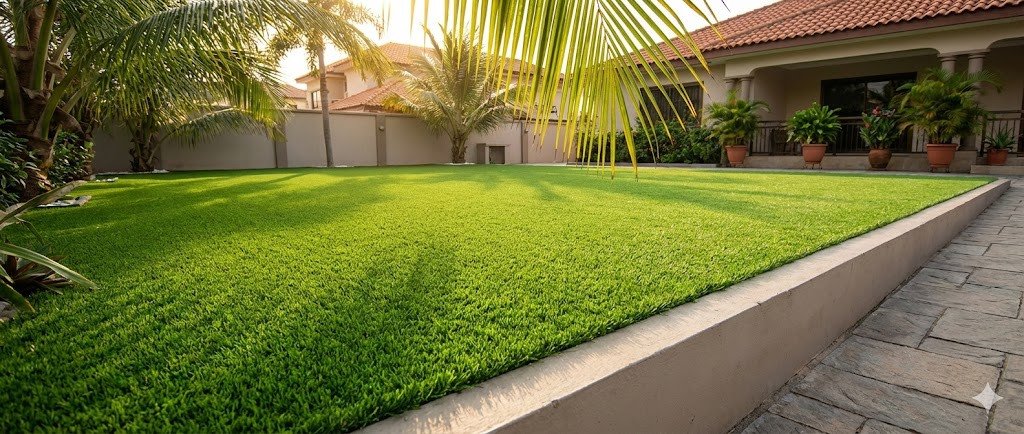
Transforming a muddy, patchy backyard into a pristine green oasis is a dream for many homeowners in Ghana. Whether you are in a newly built compound in Oyibi or renovating a garden in Airport Residential, installing synthetic turf is the ultimate low-maintenance solution.
While we always recommend professional installation to guarantee a 15-year lifespan, many DIY enthusiasts want to know exactly what goes into the process. Whether you plan to install AstroTurf at home yourself or simply want to understand the steps to supervise a local artisan, this guide covers everything you need to know.
Tools and Materials You Will Need
Before you start digging, ensure you have the right equipment. In Accra, you can rent the heavier machinery (like the compactor) from local construction equipment suppliers.
- Tools: Shovel, wheelbarrow, vibrating plate compactor (wacker plate), sharp utility knife (Stanley knife), hammer, stiff broom or power brush.
- Materials: Weed membrane, crushed rock or quarry dust (for the base), joining tape, artificial grass adhesive, U-pins (fixing pins), and silica sand.
Step 1: Ground Preparation (The Hardest Part)
The longevity of your lawn depends entirely on what lies beneath it.
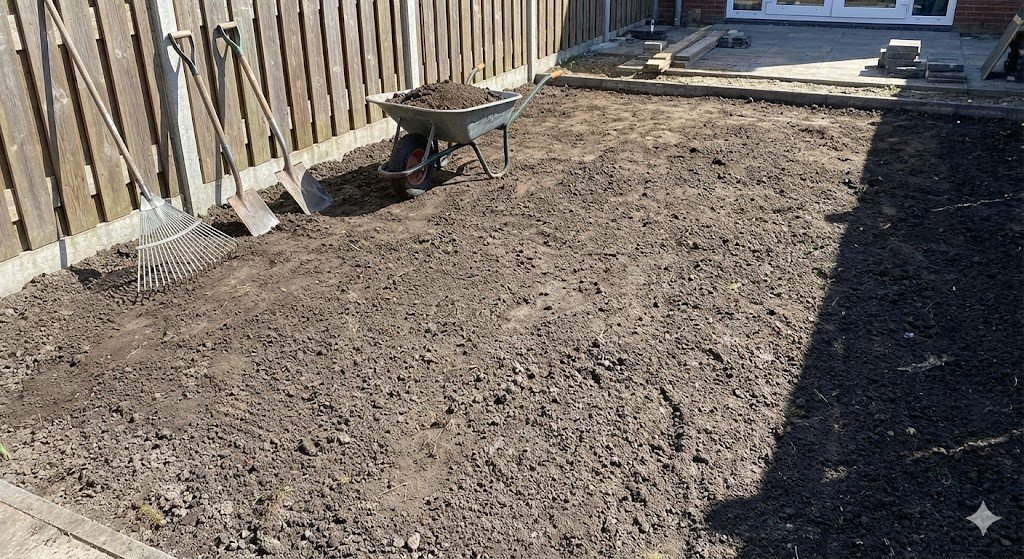
- Clear the Area: Remove all existing natural grass, weeds, and heavy roots.
- Excavate: Dig down about 3 to 4 inches (75mm–100mm). In Ghana, where the red clay soil can be dense, you need to remove enough organic matter to prevent the ground from shifting later.
- Level: Smooth out the soil, but keep a slight gradient for water runoff if necessary.
Step 2: Creating a Solid Base
You cannot lay artificial grass directly on top of soil. If you do, it will sink, become uneven, and grow weeds.
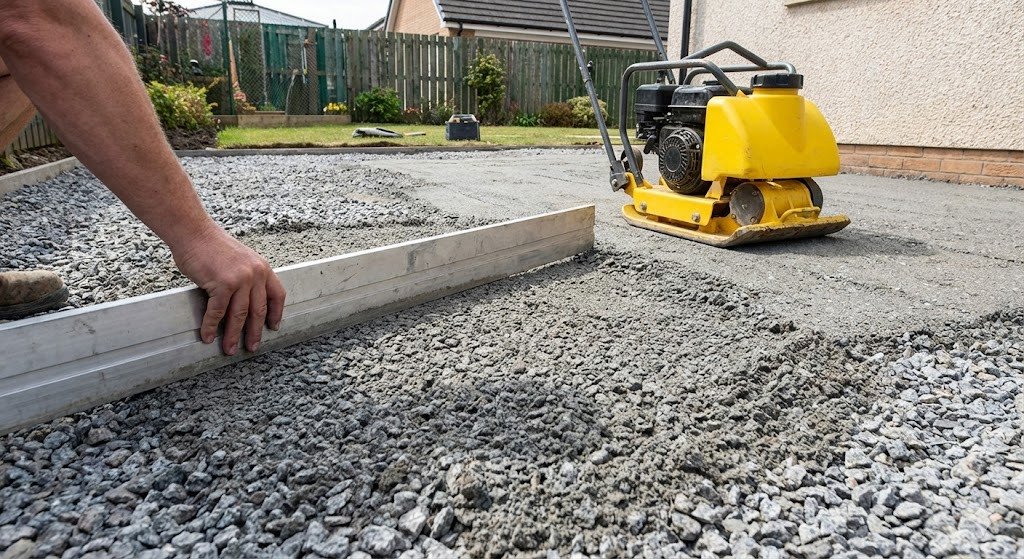
- Apply the Aggregate: Spread a layer of crushed rock or quarry dust (granite dust) over the excavated area.
- Compaction: This is critical. Use a vibrating plate compactor to smash the aggregate into a rock-hard, smooth surface. It should be firm enough to walk on without leaving deep footprints.
Step 3: Weed Barrier Installation
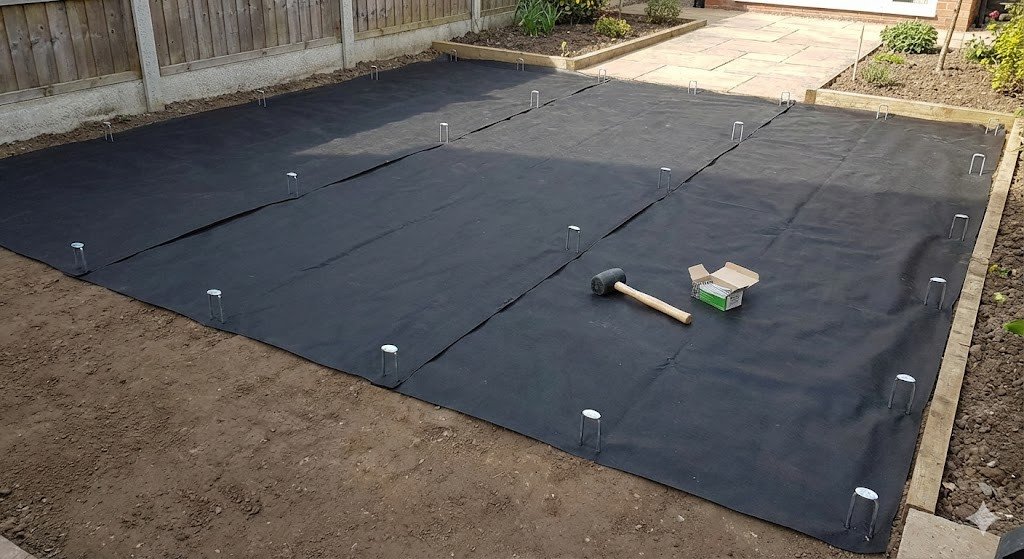
Once the base is smooth, roll out a geotextile weed membrane.
- Why? This prevents tough tropical weeds from punching through your new lawn and stops the sand base from washing away during the heavy rainy season.
- How: Overlap the edges by 15cm and pin it down.
Step 4: Laying the Artificial Turf
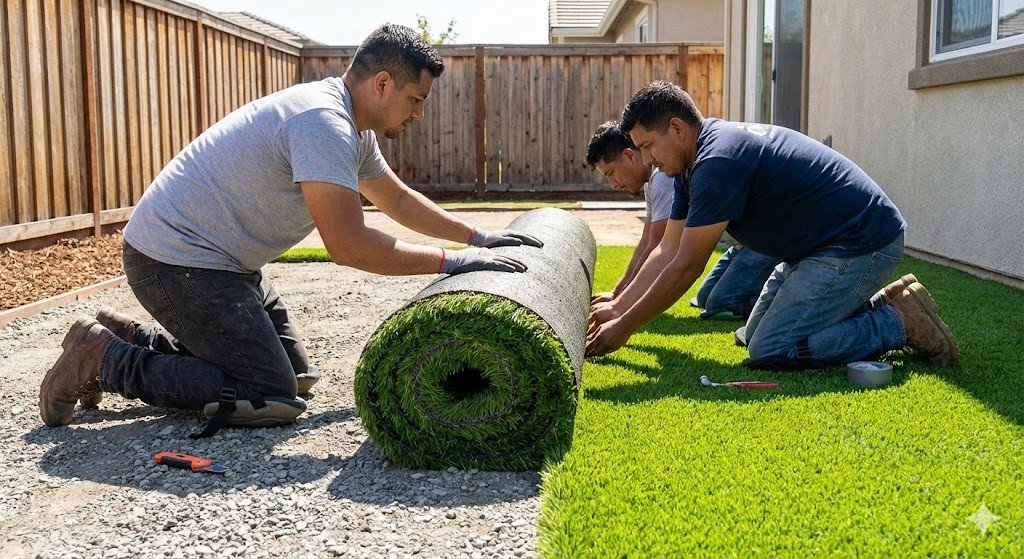
Now for the transformation. Unroll your grass carefully.
- Pile Direction: This is the pro tip. Always lay the grass so the pile (the direction the blades lean) faces the main viewpoint, usually the house or the patio. This ensures the grass looks lush and green rather than shiny.
- Acclimatization: Let the grass sit in the sun for an hour. The heat helps the backing relax and removes ripples from being rolled up.
Step 5: Cutting and Seaming
If your area is wider than the roll (usually 2m or 4m wide), you will need to join two pieces together.
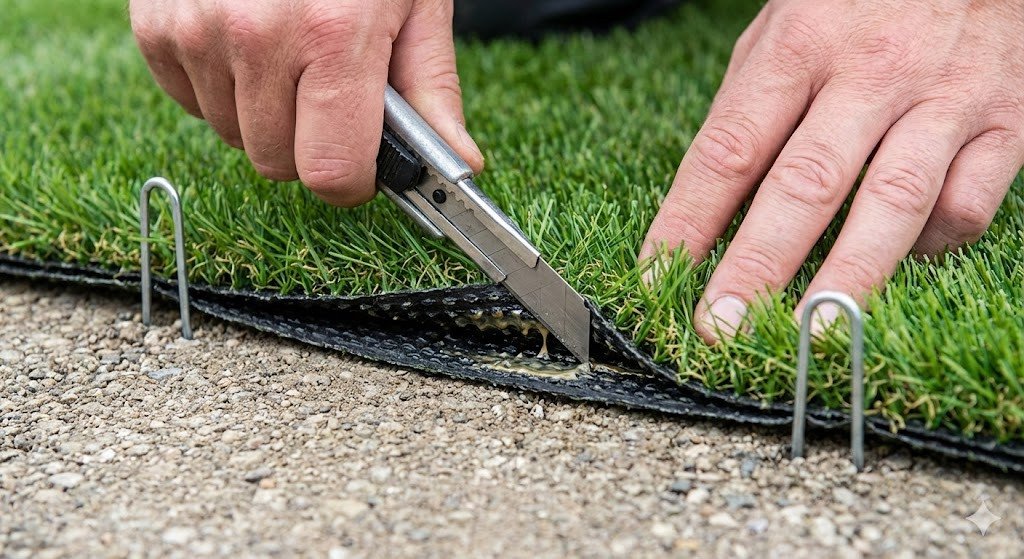
- Cut the Edges: Trim the manufacturing strip off the sides of the rolls. Cut as close to the stitch line as possible (but do not cut the stitch!).
- Butt Them Together: Line up the two pieces so the gap is barely visible.
- Apply Tape and Glue: Fold back the edges, lay the joining tape on the ground, apply the adhesive, and carefully fold the grass back down. Walk over the seam to bond it.
Step 6: Sand Infill and Brushing
Many people ask how to install artificial grass without sand, but we strongly advise against it.
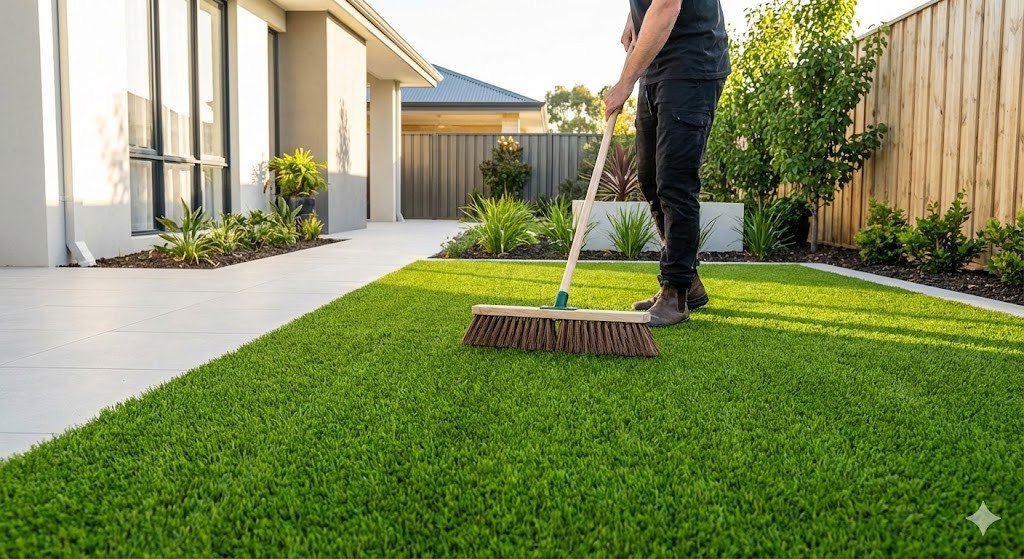
- Spread Sand: Sprinkle kiln-dried silica sand evenly over the grass.
- Brush In: Use a stiff broom to brush the sand into the fibers.
- Purpose: The sand adds weight (holding the grass down without thousands of nails) and supports the blades so they stand up straight rather than lying flat.
DIY vs. Professional Installation: What is the Cost?
The artificial turf installation cost varies depending on the square meterage and the condition of your existing ground.
- DIY: You save on labor, but you risk drainage issues if the base isn’t compacted correctly. In Ghana’s rainy season, a poor base can lead to flooding.
- Professional: Hiring experts ensures the drainage channels are correct and the seams are invisible.
Frequently Asked Questions (FAQs)
Can I lay artificial grass on concrete or tiles?
Yes, artificial grass installation Ghana often involves covering tiled balconies or concrete driveways. In this case, you don’t need to dig. You simply use a shock pad (foam underlay) to cushion the feel and spot-glue the grass to the concrete.
How much does artificial turf installation cost in Ghana?
The cost depends on the grade of grass and the complexity of the ground work. Generally, professional installation is priced per square meter. While DIY saves money upfront, professional installation guarantees the investment lasts 15+ years.
Do I really need a weed membrane?
Absolutely. In West Africa, vegetation is aggressive. Without a membrane, weeds will grow through the drainage holes of your turf, ruining the aesthetic and structural integrity of the lawn.
Need a Flawless Finish?
While knowing how to install artificial grass at home is useful, executing a perfect, seamless lawn requires experience and heavy machinery.
If you want to skip the digging and guarantee a hotel-quality finish for your home, let the experts handle it.
Contact Leter International Limited today for a full supply and installation quote.
or locate us at Awudome Roundabout, North Kaneshie (same building with papaye restaurant.) P.O.Box Ao 667, Abossey Okai,Accra -Ghana.
Follow us to stay updated on Artificial Grass News and Products with Affordable Prices:
Instagram: @leterartificial_grassgh
TikTok: @leterartificialgrassgh
Facebook: @leterartificialgrassgh
Twitter: @letergrassgh
WhatsApp: +233 055-669-9434